2012 Utah VHF Society Swap Meet
Saturday, February 25, 2011, beginning at 8:00 AM.
Where will the swap meet be this year?
At the Utah State Fairpark. This is located along the north side of North Temple at about 10th West. The festivities will be in the Zion building - the same building as last year - and the year before that , and the year before that.... The Zion building is located next to Gate B (see map) in building 34. If you have any doubt, just follow the crowd.
The Utah State Fairgrounds are big! Where do we go?
The entrance is through Gate 1 (shown in the picture at the top of the page.) This gate is about 500 feet north of North Temple on 10th west and is the main entrance to the fairgrounds. There is ample parking to the north of the building after you go through the gate. Parking and access near the building itself is limited, so please leave that parking for those who need to unload/load their stuff, as well as those who need special access.
Where do we park?
Again, please park ONLY in the main parking lot to the north of the Zion building.
If you park on the south or west side of the building and do not need "special" access (i.e. actively loading/unloading stuff, or have a "Handicapped Parking" permit) you will be asked to move to the main parking lot. These requests are being made to assure compliance with fire regulations.
Which building will it be in?
The 2012 swapmeet will be in the Zion Building - the same building as last year - and several years before that! The Zion building is next to Gate B - building 34 (refer to map.) The main entrance to the Zion building is on the West side (See the picture below.)
What is this swapmeet about?
The swapmeet is an annual event held by the Utah VHF Society where the members of the amateur community gather together and meet, swap/sell/trade stories and lies, equipment, and junque. It is also at this meeting that the UVHFS officers are chosen and elected and important matters of policy discussed/voted upon.
What sort of junque will be there/should I bring?
As you would expect, the emphasis of the swapmeet is on Amateur Radio - so if all you bring are a bunch of Vacuum Cleaners and the warped head from a '73 Buick, you will look out of place! Generally, anything ham radio-related will be fine, as are electronic and computer-related items, generally.
What about admission?
Admission is FREE for current UVHFS members
$5.00 for non member adults
$2.00 for non members 12 years old and under.
Your membership may have already expired by the time of the swapmeet - see below for info on how to renew!
Remember, for just a few bucks more than the admission, you can get UVHFS membership which, in addition to getting that nifty VHF Society booklet, will give you that warm feeling of helping support many repeaters in Utah!
For more information follow this link and scroll down half the page:
Utah VHF Society
Sunday, February 19, 2012


Tuesday, February 14, 2012
What Radio Should I Purchase...
An email written from Susan Smith KJ7ABC
to participants in the SLC SE Division CERT net
sent February 13, 2012
Dear Friends of Amateur Radio,
The classic two-pronged question a newly licensed ham usually asks is "Which radio should I buy and how much will it cost?" As in most hobbies, this question cannot be answered in a straightforward, easy fashion (but read on for a particularly low-budget option). I venture to say that the typical ham has more than one radio, including one or more handheld transceivers in addition to his or her main station, which may be a mobile radio or base station. After the primary question of which radio come the questions about antennas, power sources, other equipment, gear, manuals, organizations, nets, etc.
But, let's get back to the question of which radio to purchase. The Web offers many primers and guides to choosing a ham radio, including one at http://www.eham.net/newham/firstradio and one by ARRL to download at http://www.arrl.org/buying-your-first-radio . Some important considerations in choosing a radio include:
1.) Which bands do you plan to use? For instance, 2-meter and 70-centimeter bands are common for the Technician class and will get you onto a variety of simplex and repeater frequencies, but if you plan to upgrade to General or Extra licenses relatively soon, a broader range of bands might be considered. Do you want a radio capable of operating on more than one band? Dual-band handheld and mobile radios with 2 meter and 70 centimeter are common, with 1.25 meter as a third band on some models.
2.) Where or how are you going to be using the radio? For instance, will you be using the radio only at home, in the car, at work and/or roaming the city or hills? Many hams enjoy assisting communications for public service events such as marathons, parades, and festivalKG-UV3Ds. More and more cities are involving ham operators in preparedness for emergency disasters and in real-life community emergencies. Reaching other operators either by voice or CW (Morse Code) around the world can be exciting and challenging.
The classic two-pronged question a newly licensed ham usually asks is "Which radio should I buy and how much will it cost?" As in most hobbies, this question cannot be answered in a straightforward, easy fashion (but read on for a particularly low-budget option). I venture to say that the typical ham has more than one radio, including one or more handheld transceivers in addition to his or her main station, which may be a mobile radio or base station. After the primary question of which radio come the questions about antennas, power sources, other equipment, gear, manuals, organizations, nets, etc.
But, let's get back to the question of which radio to purchase. The Web offers many primers and guides to choosing a ham radio, including one at http://www.eham.net/newham/firstradio and one by ARRL to download at http://www.arrl.org/buying-your-first-radio . Some important considerations in choosing a radio include:
1.) Which bands do you plan to use? For instance, 2-meter and 70-centimeter bands are common for the Technician class and will get you onto a variety of simplex and repeater frequencies, but if you plan to upgrade to General or Extra licenses relatively soon, a broader range of bands might be considered. Do you want a radio capable of operating on more than one band? Dual-band handheld and mobile radios with 2 meter and 70 centimeter are common, with 1.25 meter as a third band on some models.
2.) Where or how are you going to be using the radio? For instance, will you be using the radio only at home, in the car, at work and/or roaming the city or hills? Many hams enjoy assisting communications for public service events such as marathons, parades, and festivalKG-UV3Ds. More and more cities are involving ham operators in preparedness for emergency disasters and in real-life community emergencies. Reaching other operators either by voice or CW (Morse Code) around the world can be exciting and challenging.
3.) Is D-Star or packet radio (etc.) of particular interest to you? Radios and the extra equipment for such options can be pricey.
4.) What is your budget? Some people ask whether this is a hobby they can afford even before they prepare for a licensing exam; hence, asking licensed hams their opinions and doing research on your own is extremely important to answering that question. There is a huge range of prices for radios and radio-specific accessories, from memory-programming software to replacement antennas for a handheld to
5.) What other personal considerations do you have to take into account? Is the weight or size of a handheld a major consideration? Will the radio fit your hand well if your hand is large or small? Are the keys too small for you to tap? Might you have a difficult time seeing a display with lots of information in a small font?
So, what does this boil down to? I have not attempted to develop here a guide on this topic, especially as I am a relative newbie myself and am not conversant with much of amateur radio yet, but I will offer a few insights and possibilities to those who are at the earliest stages as an amateur radio hobbyist and can't or don't want to spend a whole lot of money at this time. I plan to keep this short and sweet: radio, power, antenna.
My husband and I have purchased multiple radios since licensing as technicians in July 2010. Recently, I purchased a Wouxun (pronounced o' shing) KG-UV3D 2m/70cm radio online (http://www.powerwerx.com/wouxun-radios/kg-uv3d-dual-band.html) for $119.99 and the high-gain antenna for $29.99 to carry to work and on trips. If I'm a bit rough on packing it around, I know I'm not spending hundreds to replace it. Also, knowing that some prospective hams in the
In case you consider buying a Wouxun, here are some things of which to be aware. The purchase list I have attached below serves as a reference on this topic.
* I find the relatively short and simple operator's manual helpful and succinct.
* Some operators may feel they need a lot of memory for programming frequencies. This radio has "only" 128 memory channels.
* The connector on the radio for the antenna is not a typical
* Charge at least six to eight hours before first use, even if the green light on the charging base appears before then.
* Judging by experiences of another recent buyer and myself, the radio comes set in duplex with negative offset ... as if connecting to a repeater. For simplex operation (as in 147.50 MHz for the
* The Wouxun weighs 9.2 ounces and is 2.3 x 4.1 x 1.6 inches.
* Unlike some other radio manufacturers, the software for programming frequencies into the Wouxun is free by downloading from the Internet. One ham recommends using the free Chirp programming software at http://chirp.danplanet.com/ .
* I would be glad to lend my programming cable and/or cloning cable to anyone who purchases the Wouxun.
My purchases January 2012 from www.powerwerx.com follow.
|
WXAAB
|
$10.99
|
|
|
|
|
WXNRG
|
$5.99
|
|
|
|
|
WXCLN
|
$9.99
|
|
|
|
|
WXGAT-RV
|
$22.99
|
|
|
|
|
WXBTE
|
$14.99
|
|
|
|
|
WXS16
|
$5.99
|
|
|
|
|
KG-UV3D-2/420-520
|
$119.99
|
|
|
|
|
WXUSB
|
$15.99
|
|
|
|
|
HM05JSJ
|
$14.99
|
|
|
|
|
WXHST
|
$8.99
|
|
|
|
|
WXRSM
|
$44.99
|
|
|
|
|
WXLTR
|
$14.99
|
|
|
|
|
Flashlight
|
$0.00
|
|
|
|
|
|
Product Total:
|
$290.88
|
|
|
Saving:
|
$9.99
|
|
|
Shipping:
|
$14.11
|
|
|
Tax:
|
$0.00
|
|
|
Total:
|
$304.99
|
In response to an email on this topic, a ham says,
"After playing around with my wife's Wouxun, I don't think I'd be afraid
to try one of the other Chinese brands.
For example, AsiaRadioSales (http://www.asiaradiosales.com/en/) has dual-band handhelds
starting at $46 shipped direct from Hong
Kong . I've purchased some
other stuff from them and been satisfied.
It only takes a week or so to get here."
In addition to a radio, power and antennas are extremely important components for effective communications.
A radio can receive ("hear") radio communications on relatively low power, but transmissions require a great deal more power. If you have a handheld radio with a rechargeable battery such as the Wouxun above, most hams recommend buying an alkaline-battery pack/adapter (i.e., for AA's or AAA's), if available for your radio, and lots of batteries to act as standby when your rechargeable battery gets low. Over time, rechargeable batteries can decrease in power capacity or life, and batteries with a full charge can be critical for effective communications. There are lots of other battery or power options for handhelds, but I will not cover that here.
As antennas are a vital consideration in good radio transmission, many experienced hams recommend dedicating extra money to the antenna over buying a pricier radio when other features of possible radios are about the same. When I attached the Wouxun via the adapter mentioned above to my dual-band rooftop antenna, I was able to reach a repeater inUtah
County SLC
Southeast Division, rising above Highland Drive Salt
Lake Valley
If anyone has experience with the Wouxun, other handhelds, mobiles or base stations that could be considered budget radios for new amateur operators, please let me know your impressions of them, including model numbers, at ssmithrph@aol.com .
Kong
In addition to a radio, power and antennas are extremely important components for effective communications.
A radio can receive ("hear") radio communications on relatively low power, but transmissions require a great deal more power. If you have a handheld radio with a rechargeable battery such as the Wouxun above, most hams recommend buying an alkaline-battery pack/adapter (i.e., for AA's or AAA's), if available for your radio, and lots of batteries to act as standby when your rechargeable battery gets low. Over time, rechargeable batteries can decrease in power capacity or life, and batteries with a full charge can be critical for effective communications. There are lots of other battery or power options for handhelds, but I will not cover that here.
As antennas are a vital consideration in good radio transmission, many experienced hams recommend dedicating extra money to the antenna over buying a pricier radio when other features of possible radios are about the same. When I attached the Wouxun via the adapter mentioned above to my dual-band rooftop antenna, I was able to reach a repeater in
If anyone has experience with the Wouxun, other handhelds, mobiles or base stations that could be considered budget radios for new amateur operators, please let me know your impressions of them, including model numbers, at ssmithrph@aol.com .
Thursday, February 9, 2012
Philippines 6.9 earthquake Ham Radio update
Central Philippines earthquake update
Communications have been set up on HF as the emergency activity of amateur radio becomes established in the earthquake and landslide hit areas.
Chief Operating Officer for IARU society PARA, Eddie Valdez DU1EV said that Ham Emergency Radio Operations (HEROs) has activated the emergency frequencies of 144.740 MHz and 7.095 MHz.
Eddie DU1EV said 'They have established their command centre on board the Philippine Coast Guard search and rescue vessel BRP Davao del Norte. HEROs have been busy forwarding traffic from the disaster areas to Cebu and Manila.'
Rescue workers are searching for survivors after the 6.7-magnitude quake earthquake killed dozens of people. The death toll is 43 but rescuers are still searching for missing people in the rubble and landslides.
It struck just before noon local time on Monday in the heavily populated islands of Negros and Cebu in the country's central region.
Eddie DU1EV said that the traffic handled included mainly responding to overseas inquiries for persons looking for information about their family and friends in the earthquake areas.
He said 'As land lines and cellular phones have been erratic, amateur radio has provided a vital link. Among the active HEROs are RJ DU7RJA, Roy DU7DDJ, DW7XKS and, DW7RDX.
'Alvin DU1AJ/7 has set up his station so that it could act as relay for the HEROs at the earthquake stricken areas. He receives and sends traffic via HF, VHF, echolink and Facebook.
'In Manila, HEROs operatives Butch DU1RP and Lito DU1PA have set up camp at the National Disaster Risk Reduction Management Council (NDRRMC) under the Department of Defence.'
They are active on HF and they act as liaison between the disaster area and the NDRRMC command centre in Manila, reported Eddie DU1EV.
Jim Linton VK3PC
Chairman, IARU Region 3,
Disaster Communication Committee.
Chairman, IARU Region 3,
Disaster Communication Committee.
Article from www.southgatearc.org
Sunday, January 29, 2012
Antennas I Personally Recommend
Antennas I Personally Recommend
This is a reprint of my posting April 7, 2011 by popular request...updated!
Many people have asked what are the best antennas they should purchase for their homes and/or field emergency communications. There are many types, lengths and brands of antenna you can purchase or build yourself. I would like to recommend three specific antennas we have used in the SLC Foothill Net and I have found to be of very good quality and usefulness.
 |
| Arrow Antenna - OSJ 146/440 |
First, Arrow Antenna makes an excellent 2m/7cm J-Pole antenna. Product number OSJ 146/440.
Made from aluminum, this antenna works great for mounting on your house top either on a tri-pod, a chimney, or a metal sewer vent pipe. Because of it's simple design, you can set this up quickly and use for a semi permanent mobil emergency communications operation.
From the east bench, I am able to reach all the major repeaters throughout the valley, a couple in the Provo area, and several in Ogden area - including Tremonton. The current price of this antenna is $39
 |
| N9TAX - Dual Band 'Slim Jim' J-Pole |
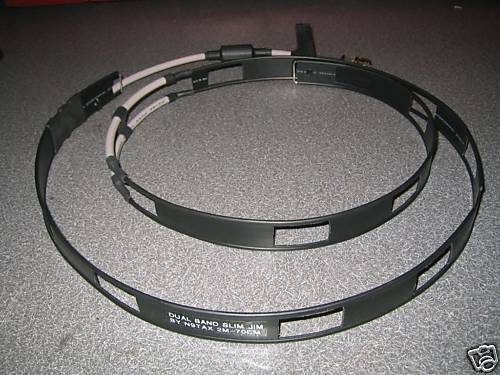
Next, there is a gentleman on ebay, N9TAX - Joseph, that sells a great product call a dual band 'Slim Jim' J-Pole.

This antenna can be supported by many things including trees, ceilings, curtain rods and pretty much anything else you can dream up that will support 6 oz of weight and keep the antenna a couple inches away from solid objects. It's lightweight for your grab-and-go kit and a super quick install.
This antenna is great for emergency communication activities, field expeditions, hotel rooms and base station use to. One member of our net hangs it from the ceiling tiles in his 3rd floor office in SLC and communicates all over the valley. Follow this link for more information on purchasing: http://cgi.ebay.com/VHF-UHF-Slim-Jim-J-Pole-Dual-Band-2m-70cm-Antenna-jpole-/320520244752. The current price of this antenna is about $23.
 |
| Diamond Dual Band NR770HA |
NR770HA mobile antenna
2m 1 1/2 wave , 70 cm 2 5/8 waves
200 watts maximum with a UHF connector
40.2 inches long.
I use a magnet mount to be able to transfer it between two vehicles – running the coax just inside the weather stripping on the door frame. If you desire a permanent mount, there are several to choose from.
I am really satisfied with the performance of this antenna both on my vehicle, and as a ‘base station’ setup in the field. I have taken this antenna and mounted it onto an expandable pole to reach a height of 25 feet. It works perfectly!! And SWR is well within tolerances.
Eham.net reviewers give the antenna a 5 of 5 rating!!
KC5BYE writes -- Really happy with the performance and the construction. 40" long and sits on top of my Jeep with the base at 67". So the tip is around 8.5 feet off the ground. It doesn’t hurt to look for low hanging trees while driving. The small coil in the center of the antenna does take the shock and has not bent on the two times it has been clipped.
The performance is excellent so far. Just having it hooked up to a 5 watt HT and I am getting every repeater in the city plus hitting out of town machines. Diamond says there is 3dB on 2m and 5.5 dB on 70cm. I have had no complaints on my signal and some are surprised when I tell them I am running 5 watts.
The antenna is rated at 200 watts so there is room to play with. My model came in black which looks better against my Cherokee and doesn’t stand out like a silver antenna. This is a replacement for a Comet(Maldol) AX 95. The AX95 base is made from plastic. I didn’t find this out till I opened the hatchback with the antenna in the down position. Which in turn cracked the antenna base and turned it into spare parts. If I had known that ahead of time I wouldn't have purchased the Maldol. The NR770 is metal and solid. This antenna looks good, feels solid and performs very well.
For the solid construction, functionality and versatility of this antenna, I recommend this mobile antenna to all. The current price of this antenna is around $55 and the mounts start at around $16.
But, don't take my word for it. 'Google' all three antenna and read what others have to say about them. The website eham.net is a good starting point filled with many reviews.
IS CERT THE FUTURE OF ARES?
IS CERT THE FUTURE OF ARES?
Tracy CERT program. In neighboring Manteca CERT group has several hams. We are in the process of training perhaps a dozen more. The fire department has its own group with a half-dozen ham members with some overlapping with CERT membership.
CERT organizations can provide the new blood that many ARES groups and ham clubs need. CERT members may be younger than the general Amateur population and come with a predisposition toward active community service. Amateur Radio provides communications that CERT needs. ARES can provide training, technology and communications leadership to CERT groups.
CERT and ARES working closely together expands the capabilities of both groups. While CERT is not a traditional entry to Amateur Radio, CERT members are naturals for carrying out our public service commitment to the FCC and the American people. This article is intended to introduce you to the possibilities of CERT and ARES working closely together. Your situation will surely be different from mine.
From May 2011 QST © ARRL
David Coursey, N5FDL
n5fdl@arrl.net
Here is a statistic I like to toss around, because it explains the future of the Amateur Radio Emergency Service,® at least in my part of the world. It starts with a question: “What is the largest, best-organized, and best-trained Amateur Radio emergency group in San Joaquin County CERT ) in the City of Tracy California
Tracy CERT , operated by the fire department, requires its volunteer team leaders to be licensed amateurs, capable of providing longer-distance communication when their teams are in the field. IndividualCERT members who are not hams use short-distance Family Radio Service (FRS ) radios to communicate with their leaders. Of the 45 responder-qualified members of Tracy CERT , more than two dozen have become licensed amateurs, most through a series of one day “HamCram” licensing events.
We follow the HamCram with training to get the new hams familiar with their radios, our frequency plan and net operation. (We have standardized on Yaesu FT-270, FT-60 and the discontinued VX-170 handheld transceivers.) No other group in our county has as many members that are as broadly trained. Almost all of the CERT hams are also ARES members. Since CERT is their primary affiliation, that’s how I count them.
Every CERT member is required to participate in at least 24 hours of CERT training, attend meetings and training sessions at least occasionally. All members have basic Incident Command System (ICS) training and have been fingerprinted and passed background checks. Each member is also a State of California
How is this the Future?
People get into CERT because they are interested in preparedness for their families and neighborhoods. Many have a strong “do-gooder” instinct looking for an outlet. CERT activities require communication. Whether day-to-day training, community events or an actual emergency, CERT members need to talk with one another, CERT leadership and their sponsoring agencies.
While some CERT groups have access to public safety radio systems, these don’t offer the flexibility and “When All Else Fails” capability that Amateur Radio does. Members also don’t get public safety radios to take home. I “sell” Amateur Radio to CERT members as a valuable tool for helping their community andCERT team that also happens to be a fun and interesting hobby if they choose to head in that direction.
The Role of the HamCram
Once sold, the CERT member needs a quick and easy way to get licensed and radio-trained enough to perform their CERT missions using ham gear. Enter the HamCram, a one day cram session — reading the question pools and answers repeatedly — that ends with the Technician exam.
I always — and only half-jokingly — warn attendees that they are likely to know less about radio when they leave the HamCram than when they arrived. Still, we have a 90 percent success rate, which makes it easy to build a cadre of hams within a CERT organization.
We follow up with training in how to use a radio and lots of ham propaganda to try to make these new HamCram hams more interested in the hobby. Probably 15 percent take the bait, and the other 85 percent have at least received a good introduction to the capabilities of Amateur Radio. Some of our CERT members are upgrading and starting to get onto HF.
Why ARES Needs CERT
One of the problems many ARES groups and clubs face is the graying of Amateur Radio. Our average age is somewhere in the mid-60s, meaning many hams aren’t the active public servants they used to be. The pool of traditional “I am really interested in radio” young hams seems to have mostly dried up, our hobby replaced by the Internet and video games in the lives of people both young and old.
Our CERT members tend toward soccer moms and their husbands more than retirees. They are already signed-up for CERT activities, so getting some of them involved in non-CERT ARES activities is not much of a stretch.
Thus, Tracy CERT has created a pool of licensed operators who can respond either as CERT -trained ARES members or as ARES-trained CERT members, depending on the mission. The Tracy ARES group includes both CERT and non-CERT members, who work together in training and response operations.
Our non-CERT hams provide advanced ARES and communications capabilities that support CERT leadership and their members in the field. This works out quite well and without the friction that sometimes occurs in other locations. Does this mean CERT is taking over ARES, or vice versa? Hardly.
While our memberships overlap, each side has core members who think of themselves primarily as either a ham or a CERT member. They have their meetings, we have ours, and sometimes we meet together. Members of one can attend the other group’s training.
This works out quite well, in no small part because Tracy CERT and the Tracy Amateur Radio Club are both young organizations that grew up side-by-side. More established organizations might have to work harder to make ARES and CERT behave as the sister organizations they should be.
Key Points
HamCrams are key to getting CERT members licensed easily and quickly, but must be followed by ongoing communications training. Having standardized radios, all programmed alike, makes it easier for ARES to support CERT members and their communications needs.
Still, Amateur Radio and CERT each have something the other needs — people and communications — so it’s worth the effort to make the relationship work.
David Coursey, N5FDL, is Emergency Coordinator of San Joaquin County (CA) ARES, leader of the Tracy ARC, and a member of Tracy CERT . Visit his blog at n5fdl.com. His e-mail address is n5fdl.arrl.net.
Additional information on organizing a HamCram can
'Communicating' is a critical element of preparedness
'Communicating' is a critical element of preparedness
On March 1, 2011 The Church of Jesus Christ of Latter Day Saints published an article relating to communication and preparedness. It was published Tuesday, March 1,2011. Check it out at the following link:
http://www.ldschurchnews.com/articles/60548/Communicating-is-a-critical-element-of-preparedness.html
http://www.ldschurchnews.com/articles/60548/Communicating-is-a-critical-element-of-preparedness.html
Loma Prieta, CA 1989 Earthquake Audio
Loma Prieta, CA 1989 Earthquake Audio
 Follow the link below to access a website that contains audio recording of a Ham repeater being used to coordinate reporting efforts just after the Loma Prieta, CA Earthquake in 1989.
Hear damage reports being called into the W6ASH (SPECS) Ham Repeater's Net Control station.
Hear the excitement and fear as aftershocks happen during the net.
http://homepage.mac.com/n6oim/loma/
From the web site:
Excuse the open microphone, it's all I could do at the time.
I started the tape about 10 minutes after the main event. Seconds before I
hear my neighbor's alarm sounding in the background. There were several
more aftershocks that happened during the taping. One knocked my phone
off the hook. You can hear the alert beeps. One aftershock interrupted the net
due to net control having to leave the Sunnyvale Fire Station he was in. I pulled
out my generator at dusk and we had the whole neighborhood at our house
watching the news. We were without PG&E Power for 3 days after the event!
The night of the quake around 11:00pm, I was called to open a Red Cross
Shelter at the
but in the morning the city condemned the building due to damage. We moved
the shelter to the Rengstorff Park Recreation Center where I finished my shift.
Subscribe to:
Posts (Atom)